How Long Does A Caterpillar Stay In Cocoon
The transformation of a monarch caterpillar into a beautiful butterfly is an awe-inspiring process. Nature enthusiasts and scientists alike marvel at this stage in the caterpillar’s life cycle. Typically, the monarch caterpillar spends about 10 days to two weeks inside its chrysalis, a protective casing that safeguards it during the metamorphosis phase. During this time, the caterpillar undergoes profound changes.
Inside the chrysalis, its body breaks down into imaginal discs, which will eventually reorganize into the structures needed for the butterfly’s flight: wings, antennae, and legs. This remarkable journey is driven by environmental factors, such as temperature and humidity, which play a critical role in determining how long it stays inside the chrysalis.
The caterpillar, having reached its full size, searches for a safe spot to hang in a J-shape. Once in place, it sheds its skin for the last time. This metamorphosis is nothing short of magical as it prepares to emerge as a butterfly. The process of forming a chrysalis can vary in time, depending on environmental conditions like temperature and humidity.

Warmer temperatures generally speed up the process, while cooler weather or harsher climates may cause the caterpillar to stay inside its cocoon for a longer period, sometimes up to several weeks or even months.
As the caterpillar rests within the protective casing, chaos and creativity occur beneath the still exterior. While it may appear dormant from the outside, inside, its body is reorganizing itself. The cells of the caterpillar undergo rapid changes, transforming into new structures that will shape the future butterfly.
It’s fascinating to think that this small, unassuming creature is experiencing such a profound change. Caterpillars typically remain in their cocoon for anywhere from 10 days to two weeks, though the duration can fluctuate due to various factors, including climate and environmental conditions.
Once the metamorphosis is complete, the chrysalis will begin to change color, signaling that the butterfly is ready to emerge. The timing of this transformation is influenced by climate, and as the butterfly emerges, the markings and colors on its wings begin to appear.
The process of emerging from the chrysalis is known as eclosing, and once the butterfly has expanded its wings, it will be ready to take flight, completing the incredible journey from caterpillar to butterfly.
How Long Do Butterflies Stay In A Cocoon
The pupal stage of butterflies, often called the chrysalis or cocoon, is a fascinating part of their life cycle, typically lasting one to two weeks (7-14 days). However, the exact duration depends heavily on species and environmental conditions.
Warmer weather tends to speed up the process, while cooler temps or harsh environments can extend it to several weeks or, in some cases, even years for certain species to ensure their survival. For example, Monarchs typically spend around 8-15 days inside their chrysalis, but this can vary based on temperature, weather, and species.
The conditions of the environment, particularly the weather and temperature, play a crucial role in how long the butterfly remains in its protective casing, making this natural transformation an awe-inspiring and delicate process.
The Life Cycle of a Monarch Butterfly
The life cycle of a monarch butterfly is an extraordinary journey, starting with the female butterfly laying her egg on a milkweed, the host plant where the caterpillars will feed. The newborn caterpillar, only 1/16th inch long, begins its life by feasting on the eggshell, its first meal. It will continue to grow, eating tirelessly, until it’s ready to rest and molt.

The process of molting involves shedding its skin to grow into a larger one, and the caterpillar spins a pad of silk, attaches its hind legs into it, and walks out of its old suit. This happens 5 times throughout its life, with each molt marking a new instar stage.
After about 18 days, when the caterpillar is fully grown, it leaves its host plant, moving to a safe place to begin the transformation. In the wild, it crawls away to avoid predators, but in a cage, it climbs to the top and spins a pad of silk. It then attaches its back prolegs to the silk and lets loose, hanging in a J shape.
Over the next few days, tentacles begin to straighten and flesh out, and the caterpillar prepares for its final molt. The chrysalis emerges as a bright, vivid green, eventually hardening into a milky green with gold markings. It is during this time that the butterfly begins to form, and in about a week, it will be ready to eclose, or emerge from the chrysalis.
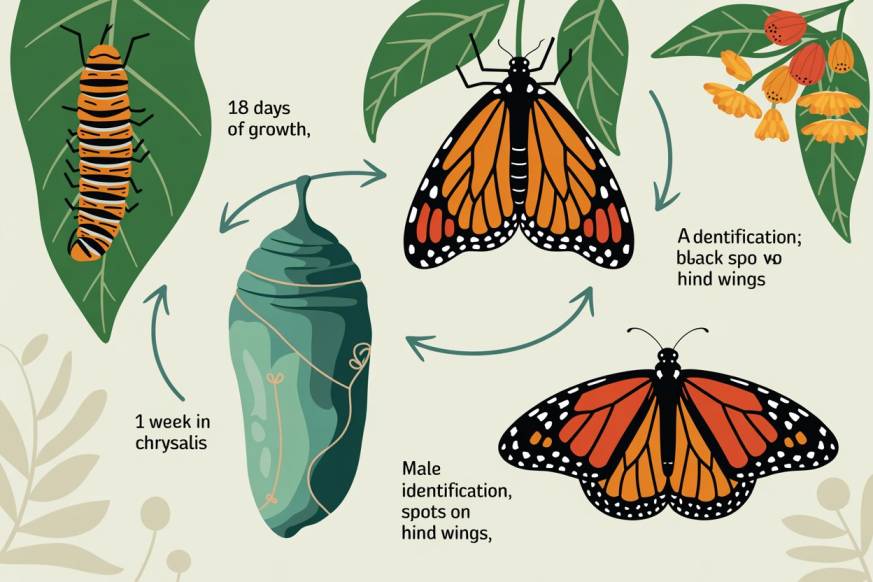
As the butterfly emerges, it begins to expand its wings. Fluid from the abdomen is pumped into the wings to help them grow, and after several minutes, the wings harden, allowing the butterfly to take its first flight. At this point, male monarchs can be distinguished by the black spot on the hind wings. After mating, the female will lay her eggs on milkweed, starting the process all over again.
How Long Does A Butterfly Live
The life span of a butterfly can vary significantly based on its species and environmental factors. For example, Monarchs and Mourning Cloaks, which are migratory and overwintering, can live for several months, while other small butterflies may only live a few weeks.
The adult butterfly typically spends 2 to 6 weeks in its adult stage, depending on its diet. Pollen and fruit feeders tend to live longer. Factors such as protection from predators and whether the butterfly is in captivity can also extend its life span.
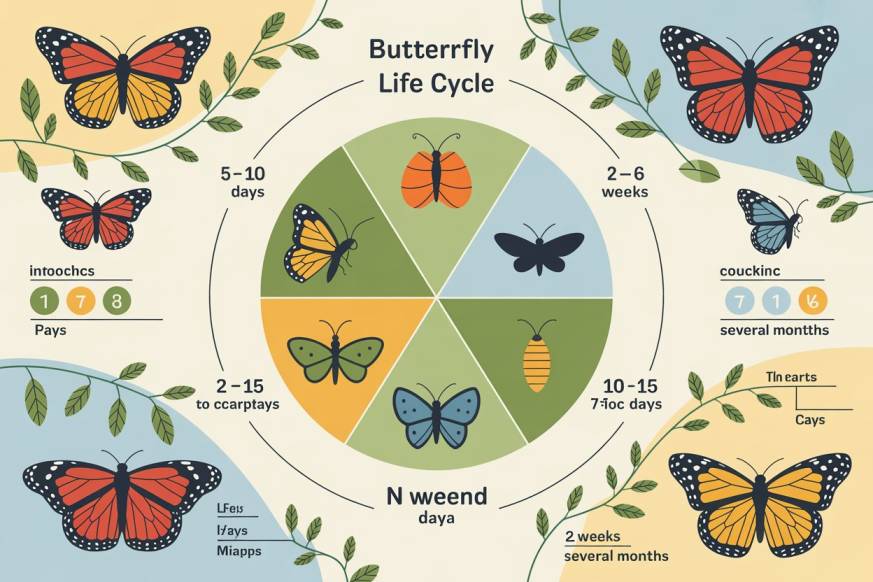
Reproduction is another factor; some butterflies may enter a dormant state to survive through the colder months. In the early stages, a butterfly’s life begins as an egg, taking 5 to 10 days to hatch into a caterpillar. After growing for weeks, the caterpillar transforms into a pupa, and the pupal stage lasts 10 to 15 days, completing the metamorphosis process before the adult butterfly emerges.
Latest Post: Insect identification by Image
How do butterflies die?
Butterflies face several dangers in their lifetime, leading to their death. In recent years, the use of pesticides on crops and fields has significantly contributed to the decline of butterflies and other insects and field animals, causing rapid deaths.
Additionally, habitat loss, natural causes, and predator attacks are common reasons why butterflies die. These threats weaken their chances of survival, often leading to untimely deaths despite the incredible transformation they undergo in their pupal stage.