How to Get Rid of Mosquitoes Inside the House Naturally
A room-by-room plan that works tonight, plus an honest verdict on every natural remedy from citronella candles to camphor.
A mosquito in the bedroom at 2 a.m. is its own kind of misery. You hear the whine. You turn on the light. It disappears.
I have dealt with this in my own home more times than I can count. I tried the candles, the lemon-and-clove trick, and the pot of basil on the windowsill.
Most of it did nothing.
What worked for me was boring and physical. Kill the ones inside. Move the air. Dry out the water. Block the gaps.
This guide walks you through that plan. It also tells you plainly which popular remedies are a waste of your evening.
The Short Answer: Kill, Blow, Dry, Block
The most effective natural way to get rid of mosquitoes inside the house is physical, not scented.
- Kill the adult mosquitoes already inside with an electric mosquito racquet or a swatter.
- Blow them off course with a ceiling fan or oscillating fan over the bed.
- Dry out every bit of standing water, indoors and out, once a week.
- Block the entry points with tight window screens, door sweeps, and caulk.
Essential oils, mosquito-repelling plants, and citronella candles are weak backups at best. I cover each one in the verdict table below.
Why Mosquitoes Are in Your House in the First Place
Only female mosquitoes bite. They need a blood meal to produce mosquito eggs. Male mosquitoes live on plant nectar and leave you alone.
A female finds you by tracking three things:
- Carbon dioxide from your breath
- Body heat and humidity near your skin
- Skin odor, including sweat and lactic acid
NIH-funded research found that one receptor neuron, called cpA, detects both carbon dioxide and skin odor. That is why a mosquito can lock onto you in a dark room.
Light is not the main draw. Indoor lights near windows and porch lights pull in many insects, but mosquitoes follow your breath first.
Once inside, they hide. During the day they rest in dark corners, closets, clutter, and humid spots such as under-sink cabinets.
They can last a while, too. An adult female can survive for weeks indoors. Overwintering females of some species wait out the cold in basements, garages, and crawl spaces.
Which Mosquito You Have Tells You Where to Look
Three groups cause most indoor trouble in the United States.
| Mosquito | Common name | When it bites | Where it breeds |
|---|---|---|---|
| Aedes aegypti | Yellow fever mosquito | Daytime, mostly early morning and late afternoon | Small containers: plant saucers, flower vases, buckets |
| Aedes albopictus | Asian tiger mosquito | Daytime | Containers, clogged gutters, bird baths |
| Culex pipiens and Culex quinquefasciatus | Common house mosquito and southern house mosquito | Dusk through the night | Stagnant water: floor drains, sump pits, septic tanks, rain barrels |
Bitten on the ankles at noon? Think Aedes, and hunt for small containers.
Bitten in bed at night? Think Culex, and check your drains and basement.
What to Do Tonight: Find and Kill the Ones Already in the Room
Start here if one is buzzing around your bedroom right now. No scent will chase it out. You have to find it.
- Shut the bedroom door. Keep the hunt to one room.
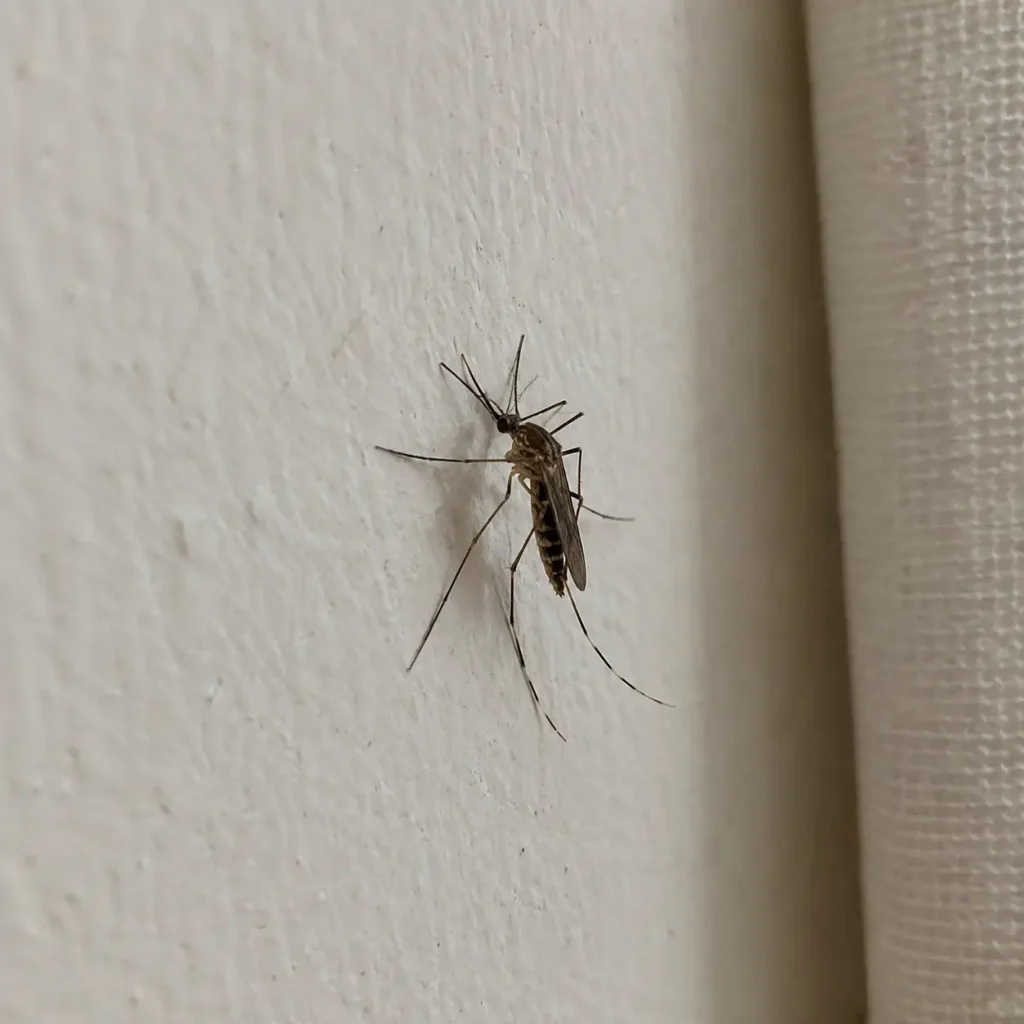
- Turn on every light. Check the walls and ceiling first. A resting mosquito shows up well on light paint.
- Search the hiding spots. Look behind curtains, under the bed, behind the headboard, inside closets, and along baseboards.
- Strike flat and fast. An electric mosquito racquet is the easiest tool. A swatter or a vacuum hose works too.
- Still can’t find it? Sit still next to a lamp for a few minutes. Your breath will pull it toward you, and it will land nearby.
In my experience, the walls behind the curtains are where they sit most often. I check there first now, and it saves me a lot of time.
Then Protect Yourself While You Sleep
Two things keep you from being bitten overnight without any spray.
- Run a fan across the bed. Mosquitoes are weak fliers. Moving air also scatters the carbon dioxide and skin odor they use to find you. Entomologists at Michigan State University found that fan-generated wind sharply cut the number of mosquitoes reaching a target.
- Hang a mosquito net. A bed canopy or a fitted net over a baby’s crib is a complete physical barrier.
I apply both on bad nights, and it works for me every time. A fan on medium, aimed along the length of the bed, has done more for my sleep than any candle I ever lit.
What Not to Waste Time on Tonight
- Citronella candles
- An essential oil diffuser
- A bowl of apple cider vinegar
- A plant on the nightstand
None of these will clear a room. More on why below.
Stop the Next Wave: Dry Out Every Indoor Breeding Site
Killing adults fixes tonight. It does not fix next week.
The mosquito life cycle runs from egg to larvae to pupae to adult. In warm weather that egg-to-adult timeline takes about a week to ten days.
That is why the CDC says to empty and scrub water-holding items once a week. Scrubbing matters, because Aedes eggs stick to the sides of a container.
Mosquito larvae need very little stagnant water. A bottle cap is enough.
| Area | Where to look | What to do |
|---|---|---|
| Houseplants | Plant saucers, plant trays, flower pots, water propagation jars, flower vases | Empty saucers after watering. Change vase water every few days. Stop overwatering |
| Kitchen | Dish drains, wet sponges, clogged sinks, the fridge drip pan | Wring out sponges. Clear slow drains. Wipe the drip pan monthly |
| Bathroom and laundry | Shower areas, floor drains, a rarely used P-trap, the washing machine, leaky faucets | Flush unused drains weekly. Fix leaks |
| Basement and crawl space | Sump pit, floor drains, the dehumidifier bucket | Cover the sump pit. Treat water you can’t drain with Bti |
| Pets | Pet water bowls | Change water daily |
| Cooling | AC window units and drip trays | Tilt the unit so it drains outside |
| Just outside the door | Gutters, bird baths, buckets, rain barrels, kiddie pools, coolers, trash containers, ponds and water features | Empty and dry containers. Clean gutters. Cover water containers with tight lids or wire mesh |
Use Bti for Water You Can’t Empty
Bti is short for Bacillus thuringiensis israelensis. It is a naturally occurring soil bacterium that kills mosquito larvae.
You will find it sold as Mosquito Dunks and Mosquito Bits. It is a larvicide, so it stops the breeding cycle before the adults ever fly.
I use it in the one spot I can’t keep dry, and the mosquito population around my door dropped noticeably after I started. Follow the label for how often to replace it.
Lower the Humidity and Clear the Clutter
Mosquitoes dry out quickly in dry air. They also need undisturbed places to rest.
- Run a dehumidifier in damp rooms. A cheap hygrometer will tell you if you are staying under about 50 percent.
- Improve ventilation in bathrooms and the kitchen.
- Declutter storage areas. Use lidded storage bins instead of open boxes.
- Vacuum under furniture and behind appliances.
Seal the Entry Points So New Ones Can’t Get In
If fresh mosquitoes show up every evening, they have a way in. Find it.
- Repair torn screens. A screen repair kit costs a few dollars. Standard fine mesh screens stop mosquitoes. Tiny no-see-ums need an even finer mesh.
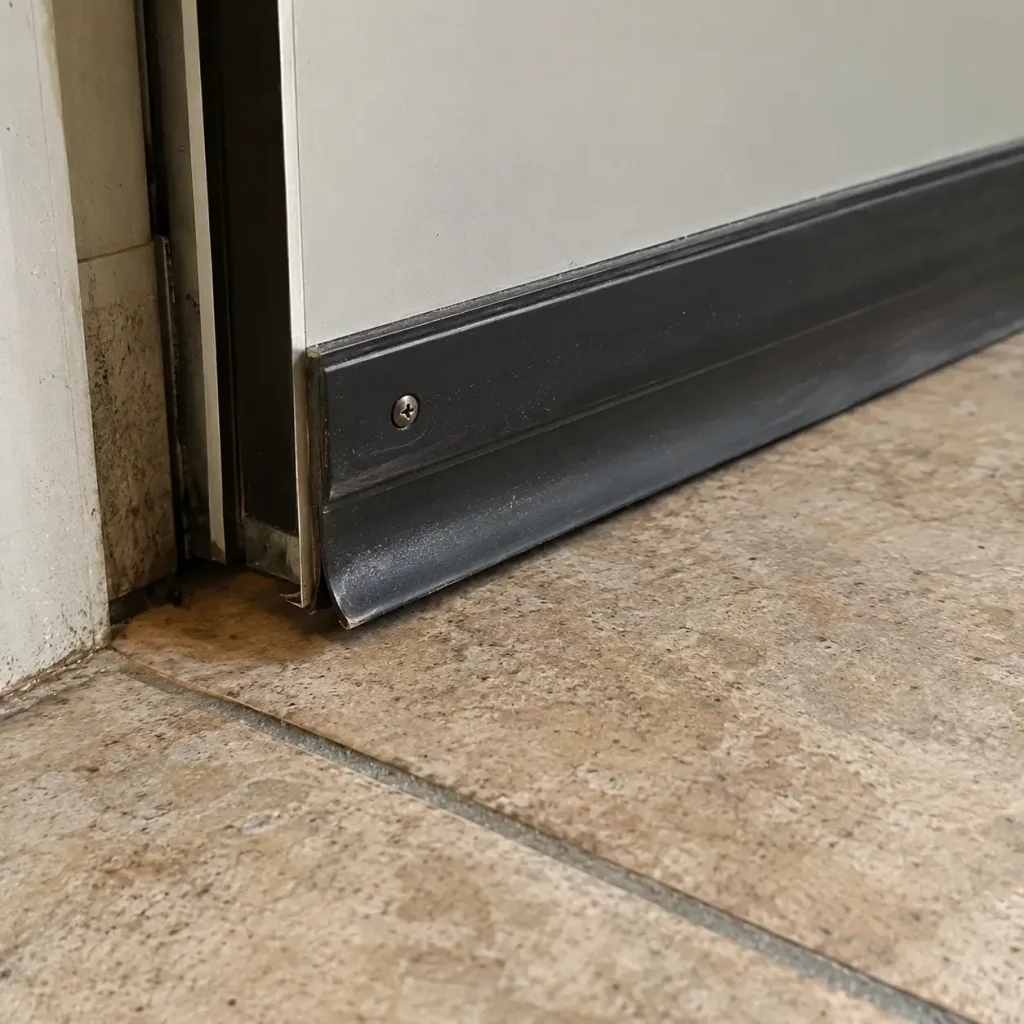
- Install door sweeps and weather stripping. The gap under a back door is a common route.
- Seal cracks and gaps. Caulk around windows and where pipes and cables pass through walls.
- Screen the vents. Cover attic vents, bathroom vents, laundry room vents, and chimneys with wire mesh.
- Slow down the door. A magnetic screen door or an automatic door closer helps at the patio, porch, and garage.
- Keep windows and doors closed at dusk and dawn unless they are screened. Use air conditioning on bad evenings.
- Tidy the yard near the house. Trim shrubs, mow grass, and remove weeds. Adult mosquitoes rest in cool shade by day.
In my experience, the back door is the one people miss. Mosquitoes wait near it and follow you in. Once I sealed the gap under mine and fixed one torn screen, the nightly arrivals dropped off.
Natural Remedies Ranked: What Works, What Barely Works, and What Is a Myth
Most articles list twenty remedies and treat them all the same. They are not the same.
I have tried a good share of these myself. Here is the honest verdict on each.
| Remedy | Verdict | Why |
|---|---|---|
| Window and door screens | Works | The CDC’s first step for keeping mosquitoes outdoors |
| Emptying standing water weekly | Works | Breaks the egg-laying cycle before adults emerge |
| Ceiling fan or oscillating fan | Works | Weak fliers can’t land, and your scent gets scattered |
| Mosquito nets | Works | A complete physical barrier while you sleep |
| Electric mosquito racquet or handheld zapper | Works | Kills the ones already inside, with no residue |
| Bti (Mosquito Dunks, Mosquito Bits) | Works on larvae | Stops breeding in water you can’t drain |
| Oil of lemon eucalyptus on skin | Works | An EPA-registered repellent with real test data |
| CO2 trap or fan trap | Helps a little | Catches some over time. Slow, and no use for tonight |
| Essential oil sprays on skin: citronella oil, lemongrass oil, peppermint oil, lavender oil, geranium oil, thyme oil, clove oil | Brief | They repel for minutes to an hour or so, then evaporate |
| Citronella candles | Barely | One field study measured only about a 19 percent drop in bites |
| Essential oil diffuser or cool mist diffuser | Barely | No good evidence that scent protects a whole room |
| Neem oil | Unproven | Results are mixed, and it smells strong |
| Camphor | Unproven and risky | Smoke in a closed room, and it is poisonous if a child swallows it |
| Sugar-yeast trap | Weak | It makes a little carbon dioxide but catches few mosquitoes |
| Mosquito-repelling plants: citronella plant, lavender, basil, holy basil (tulsi), mint, rosemary, lemongrass, lemon balm, marigold, catnip, bee balm | Myth as room protection | The oils stay inside the leaves until you crush them |
| Garlic, eaten or sprayed as garlic water | Myth | A controlled trial found eating garlic made no difference |
| Lemon and cloves | Myth | No evidence beyond repetition |
| Vinegar trap with dish soap | Wrong insect | It catches fruit flies and gnats, not mosquitoes |
| Baking soda and sugar | Myth | Nothing supports it |
| Coffee grounds | Unproven | Not a reliable larvicide at home. Just dump the water |
| Dryer sheets | Myth | No evidence for mosquitoes |
| Bug zapper or UV light trap | Mostly useless | Studies show they kill far more harmless insects than mosquitoes |
| Ultrasonic repellers and repellent wristbands | Don’t work | Tested repeatedly and failed |
Why Nice-Smelling Remedies Disappoint
The active compounds in these plants are real. Citronellal, geraniol, linalool, limonene, eugenol, thymol, and nepetalactone all bother mosquitoes in lab tests.
The problem is staying power. They are volatile, so they drift off your skin or out of the room fast.
A living plant is weaker still. A pot of lavender or a citronella plant releases almost nothing unless you crush the leaves.
I kept basil and mint by my windows for a full season. The mosquitoes came in anyway.
Researchers at New Mexico State University tested a citronella candle in a wind tunnel. It did little, and their results suggest it may even have drawn mosquitoes slightly closer.
The Plant-Based Repellents That Do Have Backing
If you want something natural on your skin, the choice is narrow.
| Active ingredient | Where it comes from | Status | Good to know |
|---|---|---|---|
| Oil of lemon eucalyptus (OLE) | Lemon eucalyptus tree | EPA-registered | Not the same as lemon eucalyptus essential oil. Not for children under 3 |
| PMD (p-menthane-3,8-diol) | The active compound in OLE | EPA-registered | Same age limit as OLE |
| 2-undecanone | Wild tomato plants | EPA-registered | Less common on store shelves |
| Nootkatone | Grapefruit and cedar | EPA-registered as an ingredient | Consumer products are still rare |
Check the label for repellent duration and the reapplication interval. Brands such as Murphy’s Naturals sell OLE sprays.
One warning about the word “natural.” Pyrethrum, also called pyrethrins, comes from the chrysanthemum flower. It is still an insecticide, and it is dangerous for cats and fish.
Mosquito coils, liquid vaporizers, and heated repellent pads usually rely on synthetic relatives of it. They are not natural, whatever the box says.
Safety First: What Is Safe Around Babies, Pregnancy, and Pets
Most people search for natural methods because someone vulnerable lives in the house. That is the right instinct. But natural does not always mean safe.
| Who | Safest choices | Avoid |
|---|---|---|
| Babies under 2 months | A fitted net over the crib or stroller, screens, a fan that is not aimed straight at the baby, long sleeves | Any repellent on the skin |
| Children under 3 | Everything above, plus a child-safe repellent your pediatrician approves | Oil of lemon eucalyptus and PMD |
| Pregnancy | Screens, nets, fans. The CDC says EPA-registered repellents are safe in pregnancy when used as directed | Undiluted essential oils on skin |
| Cats | Physical methods only | Diffusing tea tree oil, peppermint oil, eucalyptus oil, citrus, cinnamon bark oil, pine oil, or clove oil. Also pyrethrins and permethrin |
| Dogs | Physical methods, plus vet-approved products | Tea tree oil. Human repellent sprays |
| Asthma or allergies | Fans, screens, nets | Candles, incense, camphor smoke, mosquito coils |
Essential oil toxicity in cats is the one that catches people out. Cats can’t break these oils down well, and a diffuser puts them in the air and on the fur.
If your household has pets, treat pet safety as a reason to choose fans and screens over scents.
A quick word on bites. A normal mosquito bite itch fades in a few days. Large swelling, fever, or hives can signal a mosquito bite allergy, so call your doctor.
Make Sure It Is Actually a Mosquito
A surprising number of indoor “mosquito” problems are something else. The fix depends on the insect.
| Insect | What it looks like | Bites? | Where it comes from |
|---|---|---|---|
| Mosquito | Slender body, long needle-like mouthpart, high whine near your ear | Yes | Standing water |
| Fungus gnat | Tiny, dark, hovers around houseplants | No | Overwatered potting soil |
| Crane fly | Looks like a giant mosquito with very long legs | No | Damp lawns. Wanders in by accident |
| Drain fly | Small, fuzzy, moth-like | No | Slime inside drains |
Fungus gnats vs mosquitoes is the mix-up I see most. If the bugs hover over your plant pots and never bite, they are gnats.
The same goes for a crane fly vs a mosquito. Crane flies are harmless.
And if a vinegar trap is filling up, you are catching fruit flies. Mosquitoes ignore vinegar.
Getting bitten but never seeing or hearing a mosquito? Consider fleas or bed bugs before you buy another trap.
When Natural Methods Are Not Enough
I prefer to solve this without chemicals. I also know when to stop being stubborn.
Mosquito-borne illness is real in the United States. West Nile virus is the most common one in the continental US. Eastern Equine Encephalitis is rare but severe.
Dengue fever, Zika virus, and chikungunya are mostly linked to travel. Local dengue cases do occur in places such as Florida, Texas, Hawaii, Arizona, and California.
Step up your approach if:
- Your county health department reports West Nile virus or dengue activity nearby.
- You still see mosquitoes daily after two weeks of doing everything above.
- Someone at home is pregnant, elderly, or has a weak immune system during an outbreak.
In those cases, use an EPA-registered repellent with DEET, picaridin, or IR3535 as the label directs.
A licensed professional pest control company can also find a hidden breeding site. Good ones use integrated pest management, which means fixing the source before spraying.
Your local mosquito control district is worth a call too. Many inspect for free. State extension services such as Texas A&M AgriLife Extension and University of Florida IFAS publish solid local guides.
Frequently Asked Questions
What is the fastest natural way to kill mosquitoes in a room?
Hunt them with the lights on. Check walls, curtains, and closets, then use an electric mosquito racquet or a swatter. Run a fan over the bed afterward.
What smell do mosquitoes hate the most?
Oil of lemon eucalyptus has the strongest evidence, and it works on your skin. No scent reliably protects a whole room.
Do mosquito-repelling plants work indoors?
Not in any way you will notice. Houseplants hold their oils inside the leaves. Their saucers can even become breeding sites if you overwater.
Why do I have mosquitoes in my house with the windows closed?
There are three usual causes. They are breeding indoors in a drain, sump pit, or plant saucer. They are slipping in when a door opens. Or it is fall or winter, and overwintering females are emerging from the basement or garage.
How long can a mosquito live inside a house?
An adult female can live for several weeks indoors. Overwintering females of some species last for months in sheltered spots.
When are peak biting hours?
It depends on the species. Culex mosquitoes bite from dusk through the night. Aedes mosquitoes bite in daylight, mostly early morning and late afternoon.
When is mosquito season in the US?
It starts when temperatures stay above roughly 50°F and peaks in summer. In the Gulf states and Southern California it can run most of the year.
Are essential oil diffusers safe around cats?
Often not. Tea tree, peppermint, eucalyptus, citrus, cinnamon, pine, and clove oils are all risky for cats. Ask your vet before diffusing anything.
The Bottom Line
You do not need chemicals to win this. You need to stop relying on smells.
Kill the ones inside. Keep a fan on. Dump the water every week. Seal the gaps.
That is the routine I follow at home, and it has worked for me through every mosquito season since I gave up on candles.